


Gathering - One year ago, I threw a party on an empty lot...


Welcome to The Gathering
Hi friends,
Rural Routes: Food Grows Here is tomorrow (Saturday 9/12) — from 10-12 — and I would really love to see you there!
This is the first time everything is open at once: the community garden at the end of its first full season, the Foodscape you're welcome to pick from, and Gathered Local Foods Market. Come walk through our spaces, ask questions, and see what a year of work actually looks like. It's a lot better seen than described. Nothing to bring, no gardening experience required. We will have a couple of our farmer vendors at the market and samples. Plus the Market ribbon cutting is at 10am!
And one ask while I have you: If you know someone who'd get something out of the market or one of our classes — parents who want to feed their kids well but don't have time to track down different local sources, a neighbor stretching a grocery budget, a friend who wants to cook more and isn't sure where to start, someone new in town looking for a way in — forward this to them. A recommendation from you carries more weight than anything we could put in an ad.
See you tomorrow, Megan
(and Go Hawks!)


Practice | What we are growing and learning
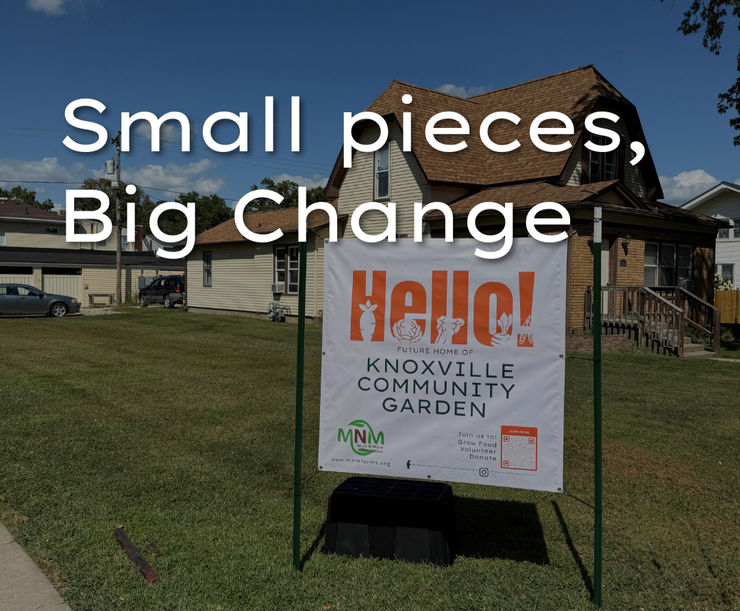
A year ago this month, I threw a party on an empty lot. I wrote at the time that I was excited and a little terrified — asking all of you to stand in grass lot and picture it with me.
A year later the garden is real. Ten plots rented, plus two more we built ourselves: one for donation, one for classes. Families used them to stretch grocery budgets with food they grew themselves. Kids learned what it actually takes to get a tomato from seed to table — a lesson that sticks harder than any poster about vegetables.
But the garden was never the whole point.
What a garden actually provides
Start with the obvious: land. A plot gives growing space to people who don’t have yards, who have a shaded yard, who live in an apartment, who have never had anywhere to put a tomato. That's access in its plainest form. But access to land turns into other things.
It turns into skill. Someone who learns to grow lettuce in a shared plot can grow it in a bucket on a back step the next year. That knowledge doesn't expire, and it travels home with whoever was helping. That skill also translates into being a discerning consumer, caring about how their food is grown, the impact on the land and those who grew it.
It turns into confidence, which is the piece people underestimate. Most nutrition advice assumes you already know what to do with a bunch of kale. Growing something yourself changes your relationship to it — you're more willing to try it, more willing to cook it, more willing to pick it up at a market the next time you see it.
And it turns into connection. A garden puts a first-time grower next to someone who's been at it forty years and gives them a reason to talk. That's how practical food knowledge has always traveled.
One piece of three
A garden alone isn't a food system, though. It asks for a season-long commitment, and not everyone can make one.
That's what the other pieces are for. The Foodscape — our edible landscape at 112 S. First Street — asks nothing at all. It's open for anyone to pick from, any time. No plot, no sign-up, no season. During market hours we give away herbs from the spiral, so someone who has never grown a thing can still walk out with rosemary in their hand.
And Gathered Local Foods Market is for the much more common situation: you want good food from people you can name, but you aren't going to grow it yourself. Ten local vendors, one pickup, food that was grown nearby, with practices that regenerate soil and farmers you can trust.
Garden. Foodscape. Market. Each one small. Each one reaching someone the others miss.
Small pieces, added up
Here's the unglamorous truth about local food systems: they don't get built in one move. There's no single grant or ribbon cutting that flips a town from one way of eating to another.
What works is a lot of small pieces, added slowly, until a person has three or four ways to reach good food instead of none. A plot. A market stop. A handful of herbs. A neighbor who shows you how to divide an iris. Any one of those is minor. Stacked up over a few years, they change what's normal here. And we still have more to do!
We hope you will join us on Saturday from 10-12pm to see what we have accomplished and how we are slowing building a better food system in Knoxville!
Gather | Community in Action


Rural Routes: Food Grows Here-September 12 Ever wonder what "growing your own food" actually looks like? It can be a small plot in town, a converted lawn, or a full homestead with pastured livestock — and this fall we're inviting you to see it all for yourself. Join us between the Community Garden at 701 E Montgomery and the Foodscape at Gathered Local Foods, 112 S First, for Food Grows Here, coinciding with the Knoxville Chamber's Fall Festival. Expect salsa demos, local vendors, prize drawings, tours of the Community Garden, and saved seeds to take home and plant yourself. Plus we are holding an impromptu Plant Swap so bring a plant to share and take something new home! Ribbon cutting at 10am at the market.
Cooking Class: Stretching your Food Dollar-September 17
Come learn how to make the most out of your food budget while creating hearty and delicious meals! This hands-on cooking class will teach you affordable recipes and strategies to tinker with your own favorites. This class is great for those of all cooking levels-from beginners to home cook masters! Please sign up ahead so we can plan space!
Rural Routes: Fall Pastures at Crooked Gap-September 20 Then head out to the farm for Fall Pastures at Crooked Gap. Hop on a hayrack for a tour of the operation and see how the family grows their own food while raising pastured pigs, chickens, lambs, and cattle — the same animals you'll find at farmers markets, sold direct to consumer, and right here at Gathered Local Foods. It's a great way for the whole family to experience the many faces of agriculture in Iowa, from garden bed to pasture.
Permaculture Presentation-Change the world one garden at time-September 21
We'll introduce participants to the principles of designing sustainable, self-sufficient gardens that work with nature rather than against it. Supporting biodiversity, and creating productive garden ecosystems.
Take Root | Your Next Step


September and October are really the setup for next season. ISU Extension keeps a running fall task list — here's the short version, vegetable garden first.
In the vegetable garden
Clean it out after the first frost. Leaves, stems, spent fruit, all of it. Most garden vegetables carry disease or pest problems that overwinter right in that debris. While we don’t want to leave bare soil over winter, it’s good to clear out spent fruit and hard stems.
Compost with care. A pile has to hit 140°F to kill most pathogens, and most backyard piles never get there. Municipal facilities do.
Plant Cover Crops. Now is the time to plant a cover crop to add nutrients back to your garden and prevent weed growth in the spring.
Write down what grew where. Don't put the same plant family back in the same spot for at least three years — that one habit prevents more disease than anything else on this list.
Everywhere else
Perennials: resist the urge to clear-cut. Standing stems and seed heads feed birds, shelter beneficial insects, and protect the crown all winter. Cut back only what was diseased or reseeds too aggressively.
Annuals and containers: clean beds out, take cuttings from favorites before frost, and empty any pot that isn't frost-proof.
Trees and shrubs: don't prune — wait until late winter. Keep watering young ones until the ground freezes, and wrap trunks against rabbits.
Houseplants: bring them in when nights hit 50°F, check for insects, and keep them isolated a few weeks.
Our tip: Walk your garden and write down what worked this year. You will not remember in March.
Source: Fall Garden Tasks, Aaron Steil, ISU Extension and Outreach Yard and Garden
Rooted Reflection
A year ago we had an empty lot; we’ve accomplished a lot since then. Do you have an “empty lot” — what could you do by next year this time?
Stay Connected
We love sharing our progress, tips, and events with you. Follow us on social media for real-time updates and community engagement.


Comments